9 November 2026
Key breeding sites vs. minor ones in larval source management
Every LSM programme ends up with a breeding-site register longer than the crew can walk in a week, and the sites on it don't carry equal weight. A handful of habitats push adult density up all season long; the rest can wait until the next round.
That sorting has a name in the trade: key breeding sites versus minor breeding sites.
What separates a key site from a minor one
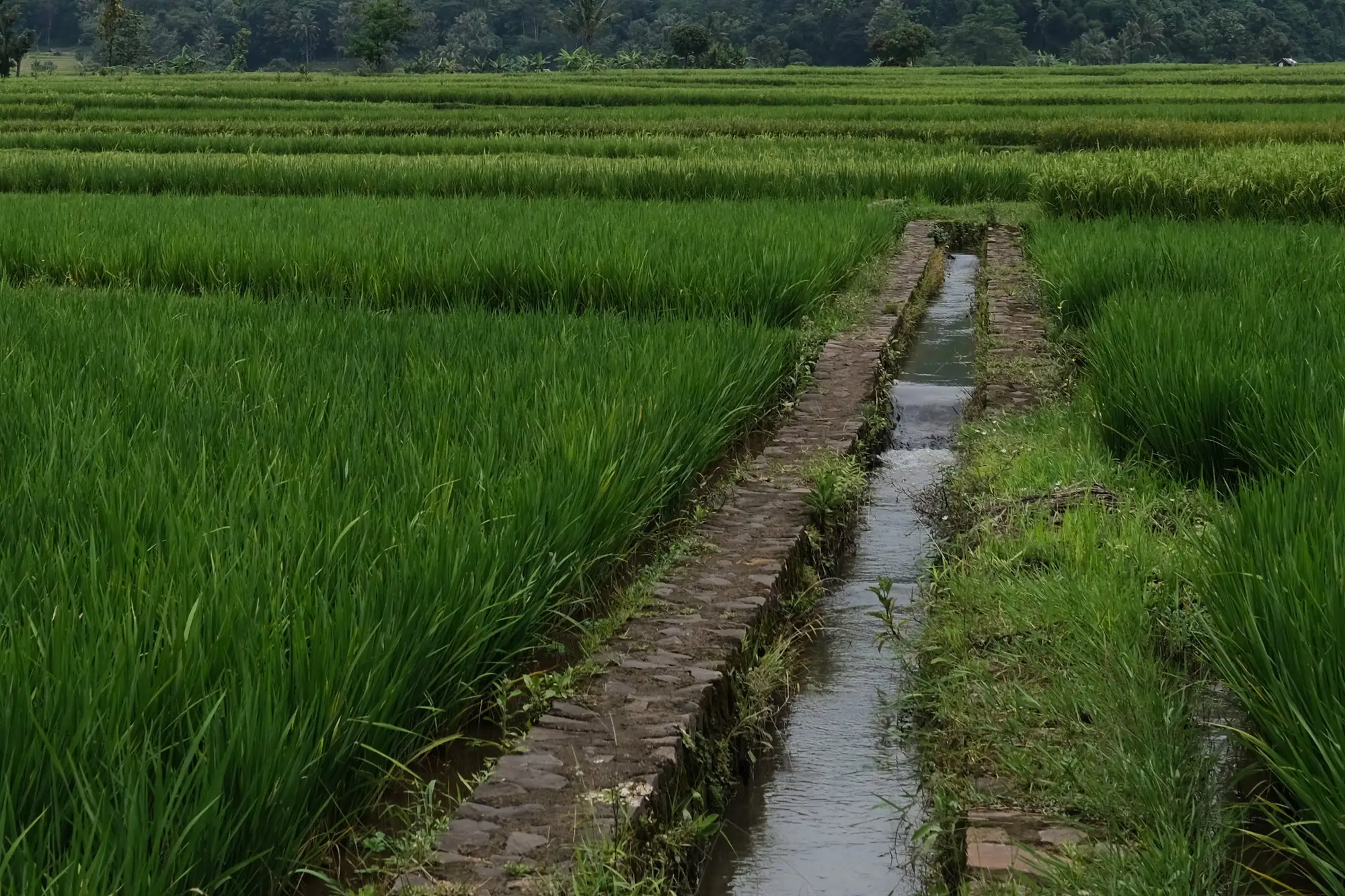
A key breeding site is a habitat that produces adults in numbers large enough, and consistently enough across the season, to drive local transmission risk on its own. The irrigation canal that never fully drains between cycles. The borrow pit that holds water from first rain to last. The rice paddy block flooded for weeks at a stretch. These are productive habitat in the strict sense: water permanence, vegetation cover, and temperature line up to let larvae complete development over and over, cycle after cycle.
A minor breeding site produces adults too, just not enough of them, or not often enough, to matter on its own. A blocked gutter after a storm. A discarded tire holding water for four days before it evaporates. A tarp fold in someone's yard. Each can host a cohort of larvae, but the habitat doesn't hold water long enough, or isn't large enough, to sustain output that moves your entomological indices.
The distinction isn't about how many larvae you dip out on a single visit. A minor site can look alarming in one dip count and still contribute almost nothing to the season's adult population, because it dries before the cohort emerges. A key site can look unremarkable in a single dip and still be doing most of the work, because it's been running larvae through every gonotrophic cycle for six weeks straight.
Why this sorting matters for crew time
Source reduction crews and larviciding teams both run on limited hours. If every site on the register gets the same treatment, the sites that matter most get the same thin coverage as the ones that don't matter at all. Programmes that rank sites by productivity, rather than raw count, get more suppression per labor-hour: larvicide goes first to the canal section and the paddy block that regenerate larvae week after week, and source reduction, draining, filling, clearing, goes to the minor sites that are cheap to eliminate for good.
The practical tell for a key site is persistence across visits. If a habitat holds standing water through two or three surveillance rounds, has emergent vegetation or algal mats giving larvae cover from predators and sun, and sits somewhere that keeps getting topped up by seepage or irrigation tail water, it's earned key-site status. Put it on the priority larviciding route and check it every cycle.
Minor sites still belong on the register. A cluster of small container habitats near a market or a construction site can add up to real output during a dry spell when the big habitats have shrunk. Keep them in rotation, just lower on the priority list than the handful of sites driving the season's density curve.
Finding key sites before the season, not during it
The hard part is usually timing. Most programmes map productive habitat the way they've always mapped it: last year's register, updated by whichever sites field staff remembered to flag. That holds up until the irrigation schedule shifts, a new borrow pit opens near a road project, or a wet spring leaves water sitting in spots that were dry last transmission season.
Breeding Habitat Map builds a seasonal view of standing water, irrigation ponding, and vegetation conditions from satellite imagery before the season turns, so the priority list for spray and larviciding routes reflects this year's conditions instead of last year's memory.
If you're sorting the register for the season ahead, that gap is the one worth closing first.